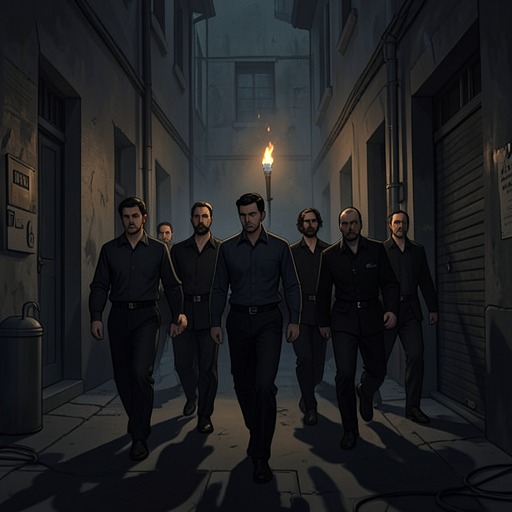
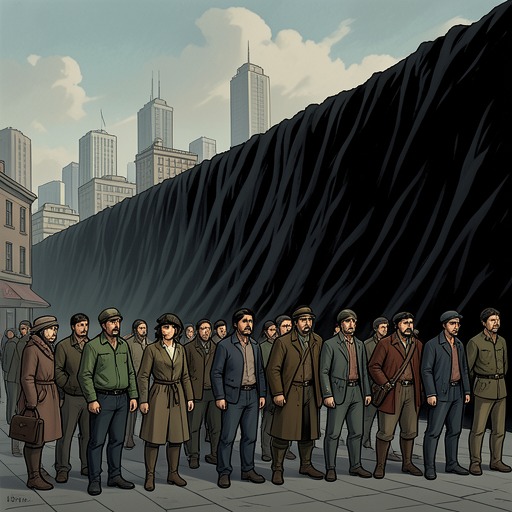
Paladin death-and-return cycle
Bound by DarknessThe Paladin death-and-return cycle is both the Paladins’ greatest protection and their most intimate danger: death need not be final, yet survival is never guaranteed to preserve the person who returns. The cycle turns every fatal injury into a medical, ethical, and emotional crisis, making resurrection a matter not simply of restoring life but of defending memory, judgment, and humanity.
Definition and Limits
The cycle allows Paladin warriors to return after death, but the process has uncertain limits. Larem understands that Lonzo Jones would not remain dead for long if he had fallen during the emergency, yet he also knows there is no guarantee Lonzo would awaken as the same man. The central fear is therefore not merely mortality but the erosion of self through repeated crossings of it. The evidence gives no fixed number of survivals; no one knows how many times a Paladin can pass through living and dying before losing the last hold on humanity.
The danger becomes especially acute when a Paladin’s physical condition has already deteriorated. Larem notices that Blake Trahern’s test results have been moving steadily toward a dangerous threshold. The Seattle Paladins know that Trahern remains alive partly because Brenna Nichols and Laurel Young refused to abandon him during his previous death, when the rescue was nearly unsuccessful. A future death might exceed even their ability to restore him. The cycle thus has a boundary that medical skill can approach but cannot abolish.
Medical and Ethical Consequences
The cycle governs the work of the Handlers, whose care extends beyond treating the living. After an attack, Laurel Young and the other Handlers first stabilize the wounded; only afterward do they attend to the dead, attempting to ease their return to life. Their practice is not routine resuscitation but a specialized intervention whose success remains unpredictable and whose failures may be irreversible.
Larem possesses a related healing capacity, and his Kalith knife has already helped bring Hunter Fitzsimon back from the dead. During a later emergency, he keeps one hand on the knife while awaiting the arrival of wounded Paladins, recognizing that the weapon might again be needed. At the same time, he doubts Laurel or her superiors would permit him to stab a patient through the heart merely on the chance that his magic might work again. The cycle therefore creates a conflict between established medical procedure and a dangerous, culturally unfamiliar form of healing.
That conflict carries an ethical burden. Larem, himself a healer by Kalith standards, recoils at the prospect of being forced to kill a Paladin who has exhausted every chance of returning. Such a decision might be necessary and even merciful, but few people would have the courage to make it. Trahern’s case makes the problem concrete: Brenna Nichols’s faith in her mate and Laurel Young’s determination gave him one more chance, but neither devotion nor expertise guarantees another.
Sasha Willis’s administrative reforms respond directly to this history. Aware that Colonel Kincade had used scans as punishment, she orders diagnostic scans to occur only on a regular schedule unless the Handlers judge that a particular case requires more frequent monitoring. She also authorizes additional personnel and funding for Laurel Young’s research. The policy changes medical surveillance from an instrument of discipline into a diagnostic resource, while acknowledging that understanding the cycle is essential to reducing the suffering it causes.
Memory, Trauma, and Human Cost
For those who love Paladins, the cycle makes attachment inseparable from anticipatory grief. Sasha’s earlier relationship with David Booker shows the cost most clearly. He was her first love, and he swore her to secrecy before revealing that he was a Paladin. Two days after proposing to her, he died first from an Other’s sword and then again from poison administered by his Handler. He never completed the return, leaving Sasha to discover only later that this was what had happened. Her conclusion is stark: the method no longer mattered because he was dead.
Eight years later, David’s dark eyes and broad smile remain as vivid in Sasha’s memory as when she first knew him. The passage of time has not dissolved the wound; it has made the loss a permanent condition of her life. Her fear of Paladin men is not abstract caution. It is a bodily memory that returns with the persistence of an old injury, even while attraction continues to draw her toward Larem. The cycle creates the cruel possibility that love may be renewed only to be interrupted by a death that the beloved cannot survive in recognizable form.
The same trauma reappears in Sasha’s dreams. After the barrier stabilizes, she sleeps uneasily, imagining Others pursuing her through darkness with blood on their swords. Yet the nightmare does not simply place her among victims fleeing danger: she is also running toward an unseen person who represents safety, desire, or both. She wakes before seeing who waits around the final corner, disappointed rather than relieved. The dream binds the cycle’s violence to the possibility of renewed intimacy, showing how the past continues to direct her emotional choices without resolving them.
Sasha converts that unresolved grief into institutional purpose. She is determined to direct every available dollar toward Laurel’s research because saving even one Paladin would make the effort worthwhile; no one, in her view, should suffer as David did. Her reformist ambition is therefore inseparable from personal loss. The cycle is not only a supernatural condition affecting warriors; it is a system of inherited fear and remembered bereavement that shapes the people who study, govern, and love them.
Relationships and Collective Responsibility
The cycle also creates bonds among Paladins, Kalith allies, Handlers, and Regents. Lonzo Jones once helped rescue Larem during the escape across the barrier, but Larem in turn saved Lonzo’s life after Lonzo was badly injured. Their friendship grew from reciprocal dependence, and Larem’s fear that Lonzo might return altered by death reveals how resurrection can threaten the very relationship it appears to preserve.
Devlin Bane’s endurance offers a contrasting example. He has been surviving the odds for years, demonstrating that repeated returns are possible, but his exceptional record does not make the process safe for others. Larem doubts that Blake Trahern will be equally fortunate, and the contrast separates longevity from security: one Paladin’s repeated survival cannot establish a dependable rule for the whole community.
The cycle also explains why Paladins close ranks around their injured and why medical decisions become collective matters. When Larem is wounded, Laurel reports that he is stable but sequestered because some Paladins react badly when they regain consciousness and sense a Kalith nearby. His different blood prevents a human or Paladin transfusion; Barak q’Young can donate only a pint, so the Handlers rely on plasma, intravenous fluids, and Larem’s own healing ability. Even a non-Paladin’s survival is consequently managed through knowledge developed around the cycle, while fear of the returning body remains socially powerful.
Narrative and Thematic Significance
The Paladin death-and-return cycle overturns the ordinary meaning of death without removing death’s finality. A fatal wound may become an interruption, but the interruption has a cost: the returning person may be weakened, altered, or eventually beyond recovery. This instability gives the Paladins’ courage a tragic dimension. They fight because they can return, yet every return makes the next loss more frightening and raises the question of what exactly is being saved.
The cycle also exposes the tension between protection and control. Paladin scans, Handler decisions, funding for research, and emergency treatment all claim to preserve life, but the history of punitive scanning shows how easily care can become surveillance or punishment. Sasha’s intervention matters because it attempts to separate diagnosis from coercion. Her policy does not solve the cycle; it changes the institutional terms under which Paladins must endure it.
For Sasha, the cycle is the point where private memory becomes public action. David Booker’s incomplete return destroys her belief that love can be measured in decades, but it also gives her a reason to challenge the system that failed him. Her later attraction to Larem does not erase that history. Instead, it demonstrates the cycle’s deepest contradiction: the knowledge that resurrection may fail, or may return someone changed, does not prevent people from choosing attachment again. Survival remains possible, but never innocent.